How to Configure a Robotic Case Packing Line for Premium Gift Boxes
The Challenge: Automated Packing Without Surface Damage
Premium gift boxes—such as rigid boxes, magnetic closure cartons, and luxury retail packaging—often feature textured paper, gold foil stamping, or delicate varnishes. While automated case packing is common for standard RSC cartons, applying it to premium gift boxes introduces specific mechanical risks: abrasive friction from conveyor rails, crushing pressure from mechanical grippers, and folded corners from uncontrolled drops.
Configuring a reliable robotic case packing line requires selecting the right end-of-arm tooling (EOAT), the correct case erecting sequence, and a synchronized control system. This guide covers the three core subsystems required to pack high-value gift boxes at 10 to 15 cases per minute.
1. Robotic Picking: Why Vacuum Cups Beat Mechanical Grippers
Standard industrial case packers often use pneumatic or mechanical grippers to clamp and lift products. For premium gift boxes, this is a critical failure point. Mechanical grippers apply lateral pressure, which can crush the box structure or leave indentations on the printed surface.
Instead, a robotic pick-and-place system equipped with vacuum suction cups should be used. By utilizing food-grade or anti-static suction cups (such as those from PIAB or Schmalz), the robot gently lifts the box from the top surface. Because the force is distributed across the cup diameter, there is no structural deformation. A pressure sensor in the vacuum line verifies that the box is securely gripped before the robot moves; if a box is missing or misaligned, the pick is aborted without a crash.
2. Case Erecting: Protecting the Outer Carton
The shipping case itself must be erected smoothly. When configuring the case erector, consider the following:
- Bottom Sealing: Use hot-melt glue or a dual-tape system to ensure the bottom flaps are fully secured. A partially sealed bottom can cause the case to collapse during robotic loading.
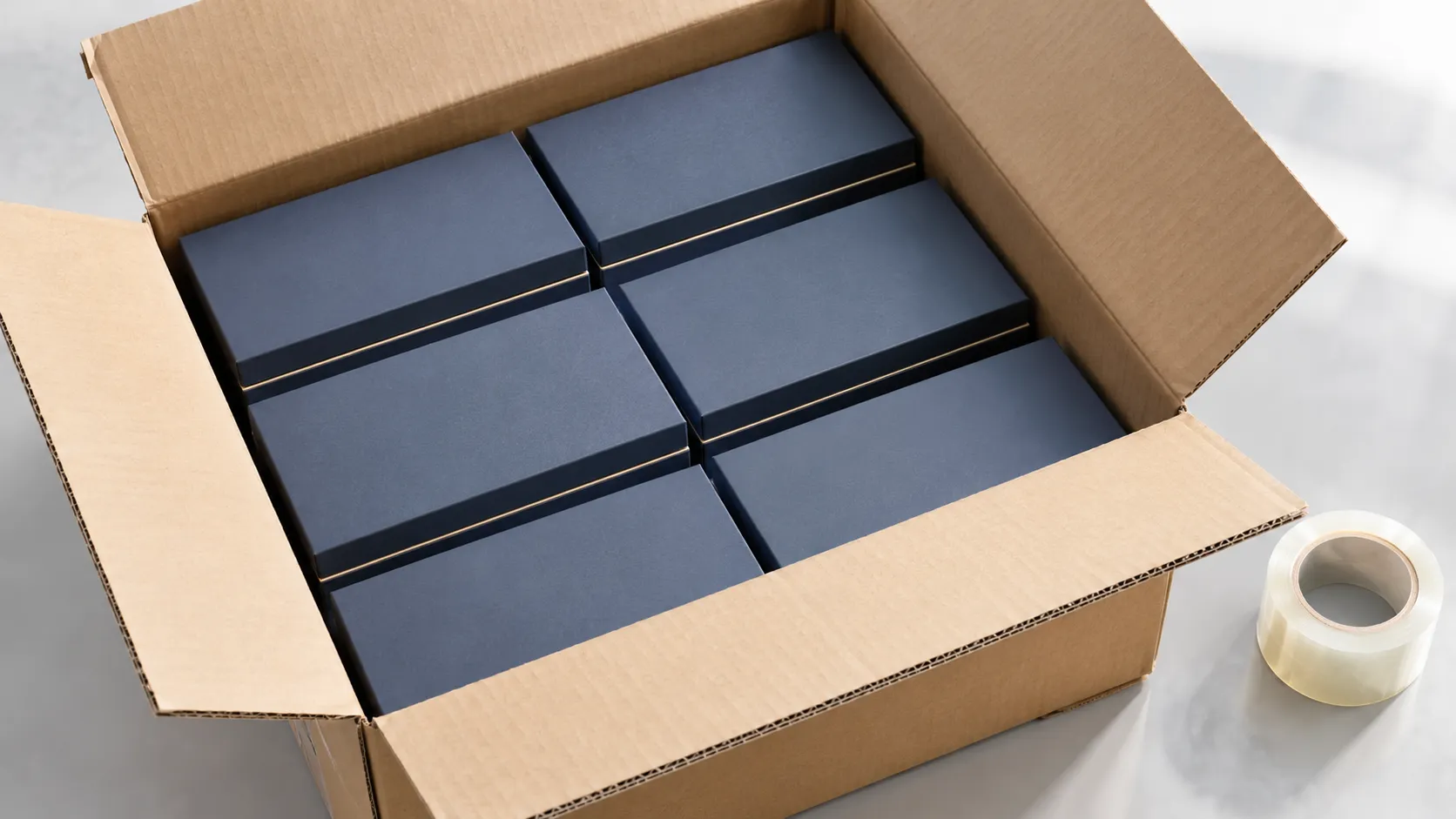
- Product Pileup: The robotic arm should place the gift boxes layer by layer. If the packing pattern (e.g., 3x2 per layer) leaves too much empty space, the upper layers may shift during transport. Use cardboard dividers or tightly calculated patterns to minimize void space.
3. Case Sealing and Optional Lidding
For standard RSC cases, top-flap sealing with OPP tape is sufficient. However, for premium packaging, a lid-placement mechanism (tray-lid style) may be required. This involves:
| Configuration | Application | Typical Throughput |
|---|---|---|
| Standard RSC with Tape Sealing | Standard e-commerce or wholesale shipping | 12–15 cases/min |
| Tray-Lid with Hot-Melt Glue | High-end retail display or export protection | 8–10 cases/min |
| Case Erector + Robotic Packer | Mixed SKU environments (handling various gift box sizes) | 10–12 cases/min |
4. Line Layout and Robot Selection
The layout should maximize the robot's reach while minimizing the footprint. A Delta (spider) robot is ideal for high-speed overhead picking, while a 6-axis articulated robot is better suited for complex multi-layer stacking and palletizing.
A typical line includes: an integrated case erector, a checkweigher for the packed carton (ensuring the correct number of boxes are inside), a top-flap sealer, and an optional robotic palletizer. If the gift boxes are pre-wrapped in protective film, the robotic gripper must be designed to avoid puncturing the film during placement.
Choosing the Right Configuration
For manufacturers producing luxury cosmetics, confectionery, or premium spirits packaging, the investment in gentle robotic handling protects the brand value of the product. For a complete overview of our end-of-line systems, see the [[gift-box-case-packing-robotic-palletizing-system|Gift Box Case Packing & Robotic Palletizing System]] or the [[case-packing-machine-side-load|side load case packing machine]] range for different product geometries.