How Bag-in-Box Packaging Machines Work in Modern Case Packing Lines
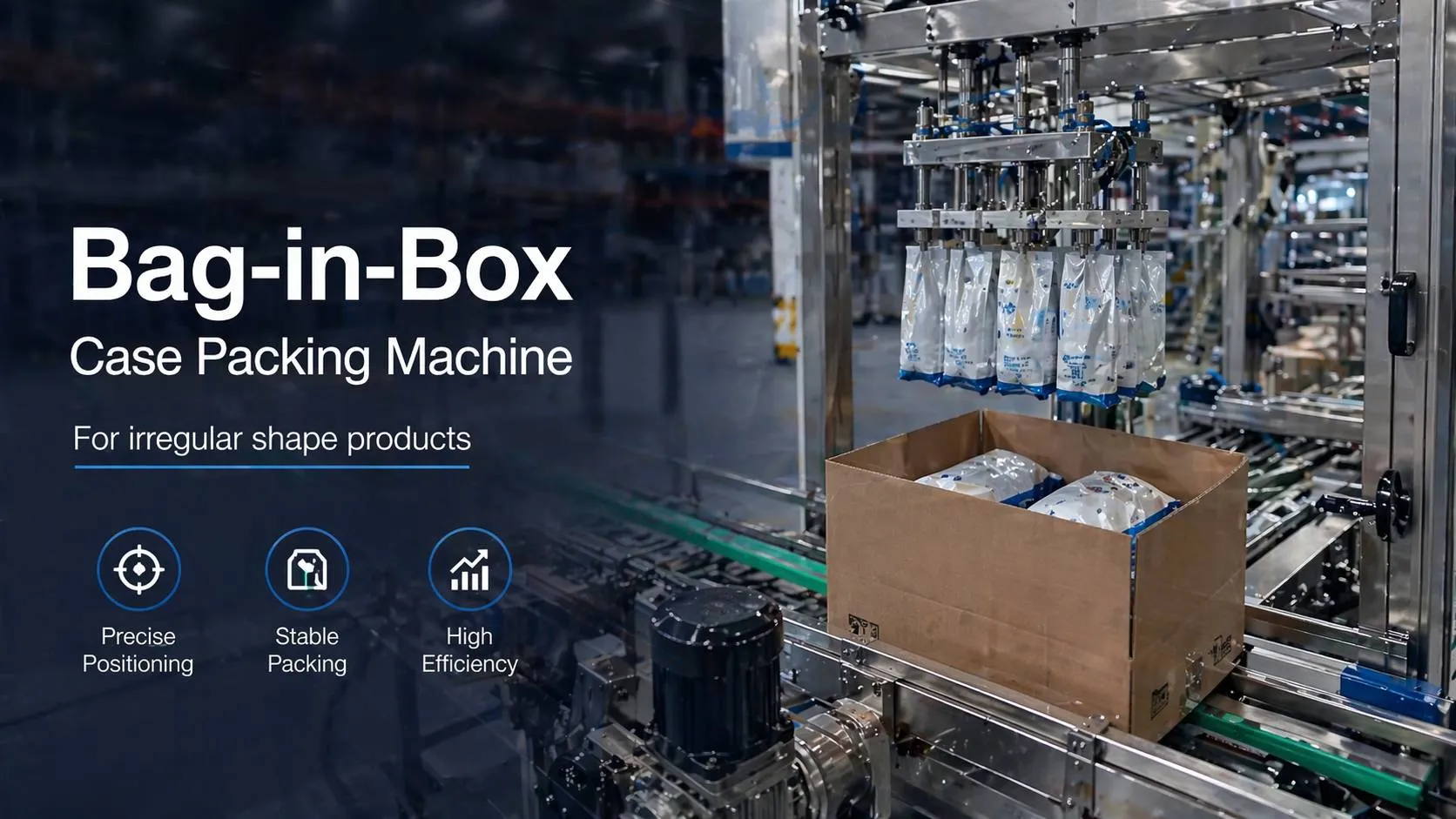
Why Bag-in-Box Packaging Machines Are Essential for Irregular Products
In modern automated packaging lines, not all products have stable shapes or rigid structures. Flexible pouches, snack bags, frozen food packs, and disposable items often deform or shift during handling.
Traditional case packing systems struggle with these products because they rely on precise alignment or direct placement.
Bag-in-box packaging machines solve this issue by introducing a controlled pre-stacking mechanism before carton loading, ensuring product stability before final packing.
Core Working Principle of Bag-in-Box Systems
The system is based on a two-stage automation process combining stacking and side loading technology.
- Step 1: Case is automatically erected and prepared for loading
- Step 2: Products are gently dropped and formed into stable layers
- Step 3: Side push mechanism transfers the grouped products into the carton
- Step 4: Carton is sealed and sent to downstream conveyor
This method reduces product deformation and ensures consistent packing quality even for irregular shapes.
ZC-SL550 Engineering Design Advantages
The ZC-SL550 bag-in-box packaging machine is engineered for unstable and soft product handling scenarios.
Unlike direct drop systems, it introduces a controlled buffering stage before carton loading, which significantly improves stacking accuracy and reduces impact force on products.
With a stable output of up to 8 cases per minute, it balances efficiency and precision for medium-speed production environments.
Integration into Automated Case Packing Lines
Bag-in-box systems are typically integrated into full packaging lines including upstream filling machines and downstream sealing systems.
Products are automatically transferred from filling or forming equipment into the case packing system without manual intervention, enabling fully automated end-of-line packaging.
Industry Applications
This system is widely used in industries requiring flexible handling of irregular products:
- Food industry: frozen foods, snacks, bakery products
- Daily chemicals: wipes, disposable items, household products
- Light industrial goods: plastic trays, paper cups, packaging kits
Key Benefits for Manufacturers
Compared to manual packing or traditional case packing systems, bag-in-box machines offer significant advantages:
- Improved packing consistency for irregular products
- Reduced labor dependency in packaging operations
- Lower product damage during handling
- Higher standardization of carton output
These advantages make them a critical component in modern automated packaging lines.