Top 5 Bag-in-Box Packaging Machine China Manufacturers: Buying Guide
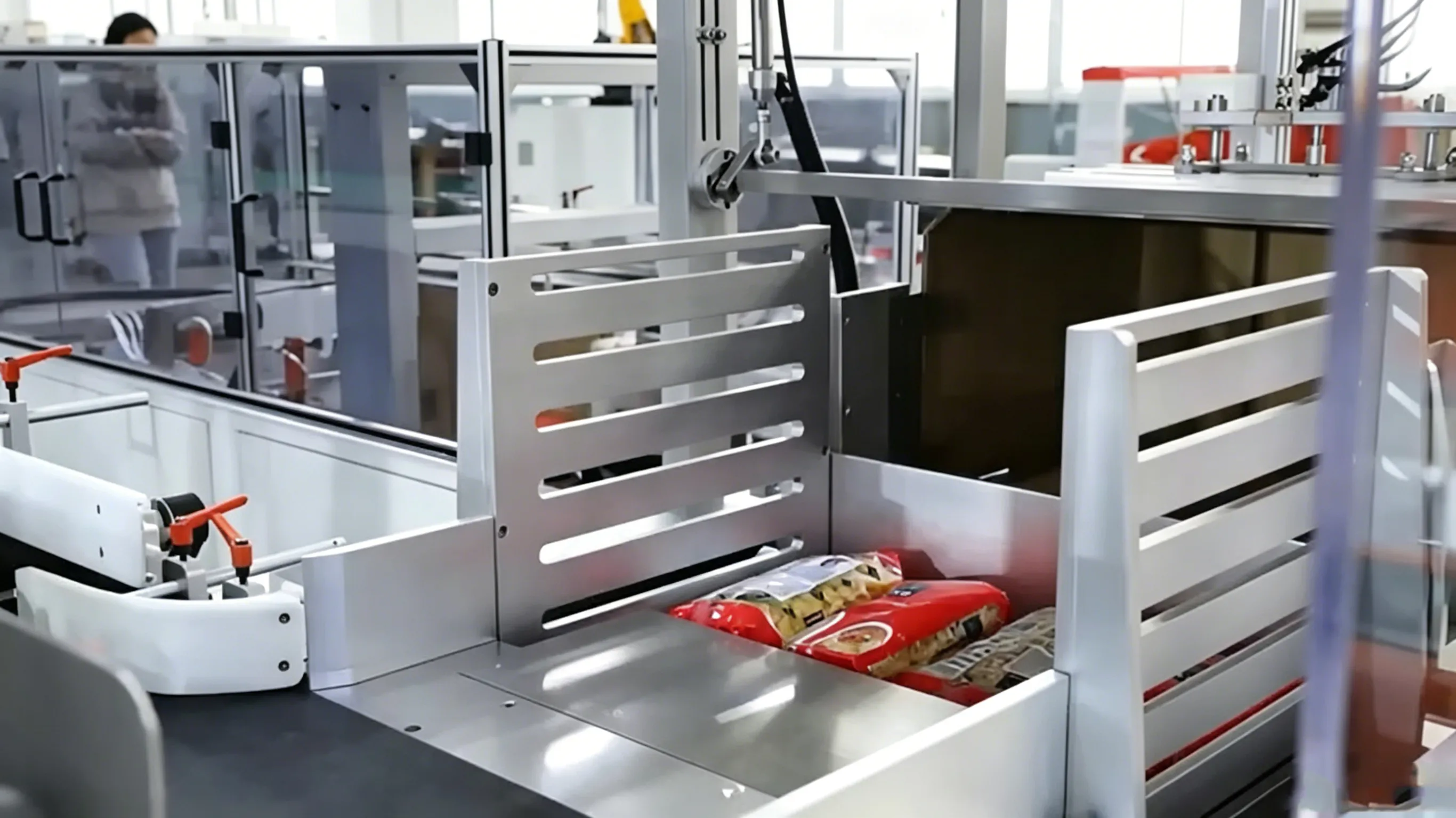
Manual vs. Automated BiB Cartoning: A Real-World Comparison
Handling fluid-filled bags manually is a notorious bottleneck. The shifting liquid makes steady positioning nearly impossible at higher speeds, leading to frequent packaging errors. Upgrading to a specialized bag-in-box packaging machine from a Tier-1 Chinese factory changes the entire end-of-line dynamic:
| Key Metric | Manual Packaging Line | Automated BiB Packer (Top China Build) |
|---|---|---|
| Throughput Speed | 2 - 4 boxes/min (highly inconsistent) | 10 - 25+ boxes/min (continuous servo flow) |
| Bag Puncture Risk | High (caused by dropping and fingernail snags) | < 0.05% (smooth vacuum pick-and-place) |
| Dispensing Tap Alignment | Hit-or-miss (requires constant manual adjusting) | 100% Correct (guided by optical registration) |
| Labor Allocation | 3 - 4 operators per station | 1 operator (part-time oversight only) |
Inside the Workflow: How a Premium BiB Packer Operates
The top 5 bag in box packaging machine China manufacturers don't just push bags into boxes; they use a synchronized four-stage process to manage fluid dynamics. This precise handling is what separates a true bag in box case packer from a standard, generic cartoner:
- 1. Squaring and Bottom Glued: Flat cardboard blanks are pulled from the hopper, squared perfectly, and sealed at the bottom using industrial hot-melt glue to guarantee the box won't sag under heavy liquid loads.
- 2. Spout / Tap Orientation: As the pre-filled bags arrive on the conveyor, integrated optical sensors locate the dispensing valve (whether it is a Vitop, Scholle, or Rapak style) and rotate the bag so the tap faces the box's punch-out window.
- 3. Servo-Driven Drop or Push: Rather than letting the bag drop heavily, custom vacuum grippers or side-shuttles lower the flexible bag into the box smoothly, absorbing the liquid's kinetic energy to prevent bursts.
- 4. Top Closure: The top flaps are folded down and taped or glued instantly, discharging a tight, retail-ready box directly to your palletizing line.
Sourcing Checkpoints: Filtering Your Chinese Suppliers
Not all factories on a "Top 5" list offer the same build quality. When vetting potential China partners, base your evaluation on these practical engineering requirements:
- Control Architecture: Insist on global standard PLCs and motion controllers (like Siemens, Allen-Bradley, or Omron). This ensures your local team can easily troubleshoot or update software down the road.
- Film Protection: Inspect the loading funnel and product guides. Every contact point must be made of mirror-polished SUS304 or SUS316 stainless steel with rounded edges to prevent microscopic tearing of the barrier film.
- Changeover Speed: Ask for a live demonstration of a changeover. Elite manufacturers use toolless, scale-indicated adjustments that let you switch between 3L, 5L, 10L, and 20L box sizes in under 15 minutes.
Frequently Asked Sourcing Questions
- Q: What types of liquids can these automated lines handle? A: They are standard for wholesale wine, liquid dairy, liquid eggs, post-mix beverage syrups, edible oils, and even industrial chemical fluids like laundry detergents.
- Q: How do we handle international FAT and factory support? A: Top-tier Chinese factories provide comprehensive digital FAT (Factory Acceptance Testing) via high-definition live feeds, remote PLC diagnostics via secure VPN, and ship machines pre-loaded with full English documentation and interface software.
Related Solutions
Product Keywords
wine bag in box packaging machine manufacturers industrial hot melt glue bib cartoner china high speed flexible bag case packer
Solution Keywords
automated bib cartoning machine price liquid bag in box packaging system
Related Questions
top 5 bag in box packaging machine china manufacturers what is a bag in box packaging machine bag in box case packer factory
Popular Searches
top 5 bag in box packaging machine china manufacturers bag in box packaging machine china bag in box case packer automated bib cartoning liquid box packing machine factory